The 5 Core Materials of Urban Industrial Design
Industrial design is not a mood board — it’s a material language. Master these five and every decision that follows becomes clearer.
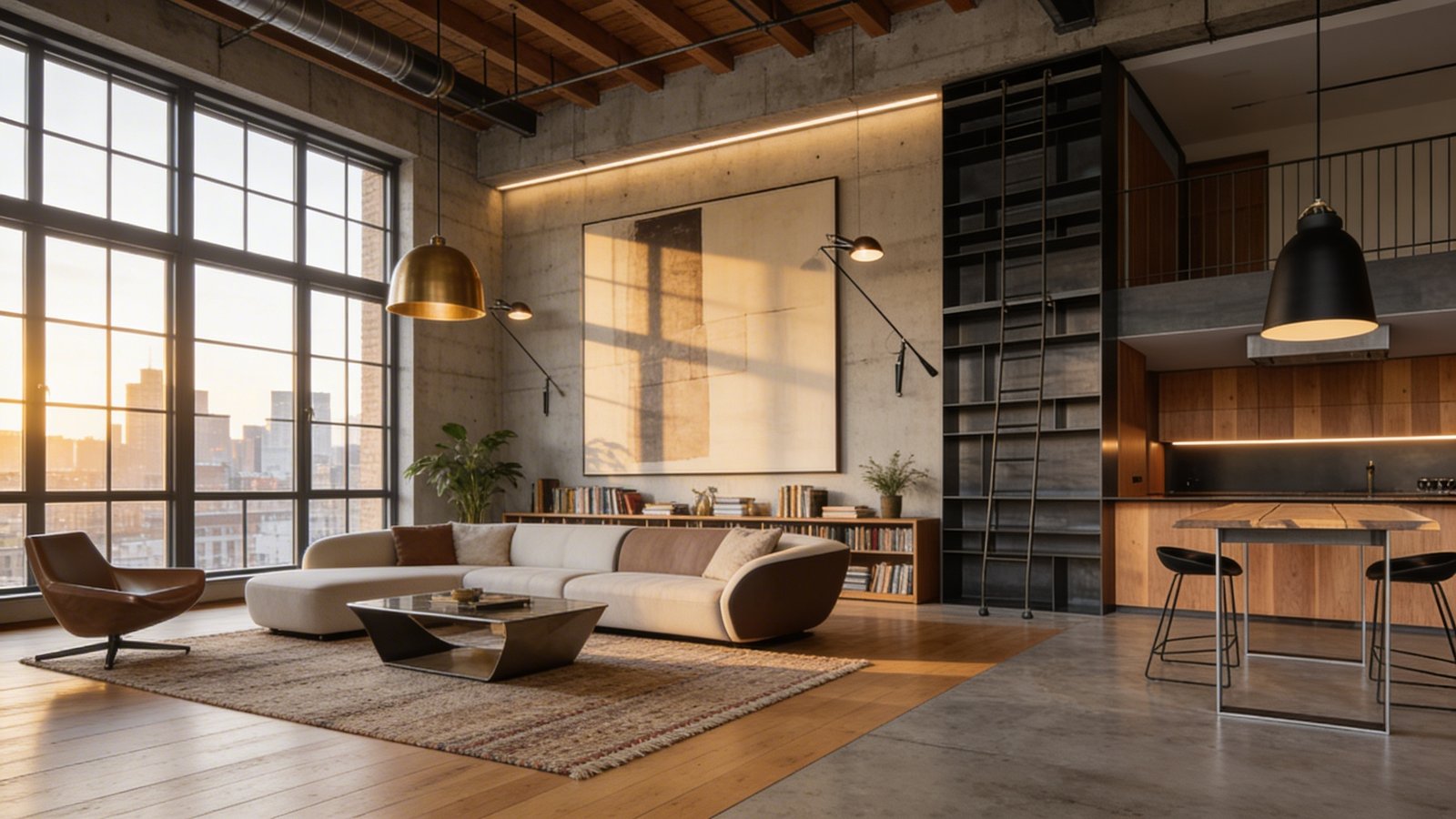
Every design language has a vocabulary. The vocabulary of urban industrial design is not metaphorical — it’s literally material. Five substances, used honestly and in the right relationships to each other, produce spaces that feel both raw and considered. Use one without understanding its relationship to the others and you get a theme. Use them together with intention and you get a character.
Material 01 — Raw Steel
The Skeleton
Steel is the skeleton of industrial design. Not polished stainless, not brushed chrome — raw, dark, matte steel that shows its age and its manufacture. The slight surface variation, the mill scale, the way it absorbs rather than reflects light.
Where to Use It
- Furniture frames and table legs
- Window frames and door hardware
- Shelving brackets and pipe systems
- Stair handrails and balustrades
- Light fixture bodies and cages
Avoid polished or chrome finishes. The goal is to suggest industry, not luxury. Matte, dark, and slightly imperfect is always preferable.
Material 02 — Exposed Brick
The Biography
Original brick carries something no reproduction can replicate: the record of the building’s life. The mortar variations, the colour shifts where previous pipes were mounted, the slight sag at old window openings. These imperfections are not flaws — they are the brick’s biography.
The Rules
- Never paint original brick. The colour is irrelevant — the texture is everything.
- One wall maximum. Full brick rooms look like restaurants, not homes.
- Clean, but don’t restore. Remove soot, preserve variation.
- If using brick veneer, use real thin-split brick — not panel systems.
Material 03 — Raw Concrete
The Ground
Concrete is the most democratic of the industrial materials — it can be cast into any form, any thickness, any texture. In a loft context, it appears most powerfully as floors and statement surfaces: kitchen countertops, bathroom walls, exposed structural ceilings.
How to Finish It
- Sealer only — preserves the raw matte surface. Most authentic.
- Penetrating wax — slight sheen. Warmer feeling. Works well on countertops.
- Impregnator + topcoat — for wet areas. Still matte if chosen correctly.
- Avoid: high-gloss epoxy and polished concrete in residential settings — both too clinical.
Material 04 — Reclaimed Wood
The Warmth
Wood brings warmth to a material palette that would otherwise be entirely cold. Reclaimed timber — from old barns, factories, ship decks, or railway sleepers — carries a density and richness that new lumber simply cannot produce. The grain is tighter. The colour is deeper. The imperfections are genuine.
Best Applications
- Dining table tops — the most common and most effective use.
- Floating shelves — especially on raw plaster or brick walls.
- Flooring — wide-plank, minimal sanding, oil finish only.
- Ceiling beams — if original beams are absent, reclaimed wood is the only honest substitute.
- Bed frames — the warmth it brings to a bedroom softens the harder elements.
Material 05 — Aged Leather
The Comfort
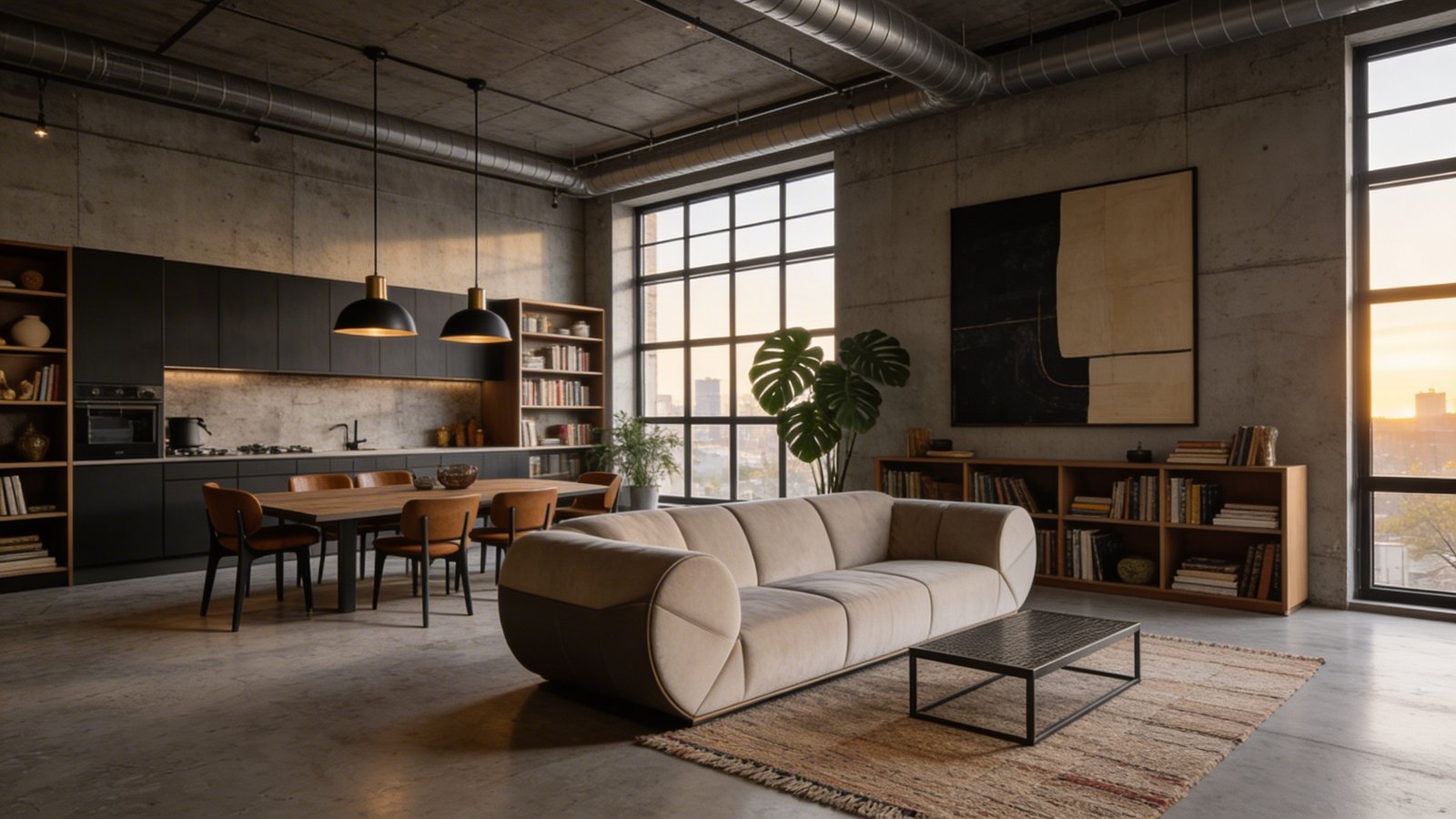
Leather is the organic counterpoint in an industrial space. It introduces warmth, softness, and tactility into an environment that would otherwise be relentlessly hard. But it must be the right leather: full-grain, top-grain, or genuine leather only. Pull-up leather that develops patina over time is ideal.
Colour Selection
- Cognac / tan — the warmest choice. Pairs beautifully with black and copper.
- Dark brown — more restrained. Anchors without dominating.
- Black — powerful but can flatten the palette. Use only with warm textures nearby.
- Avoid: white, grey, or coloured leather — these belong to a different visual language.
The Relationship Between Them
These five materials are not a checklist — they are a system. Steel and brick provide structure. Concrete provides ground. Reclaimed wood provides warmth. Leather provides comfort. Remove any one of them and the palette becomes unbalanced. Include all five, even in small proportions, and the space achieves the tension between hardness and livability that defines urban industrial design at its best.
These materials are not a checklist — they are a system. Each one exists in relationship to the others. Together, they create something none of them can achieve alone.